
OpenAI Says Its Models Rewrote Circuit Code in AMD's Flagship GPU for Up to 14% Better Power, Performance and Area
On November 18, 2026, OpenAI detailed how its models improved chip designs, including up to 14% PPA gains on AMD's flagship GPU IP, some already in a design sent for manufacturing, and area savings of about 13% and 10% in two compute blocks of its own Jalapeño inference chip. It also published RISC-V evaluations led by GPT-6.2 Astra.
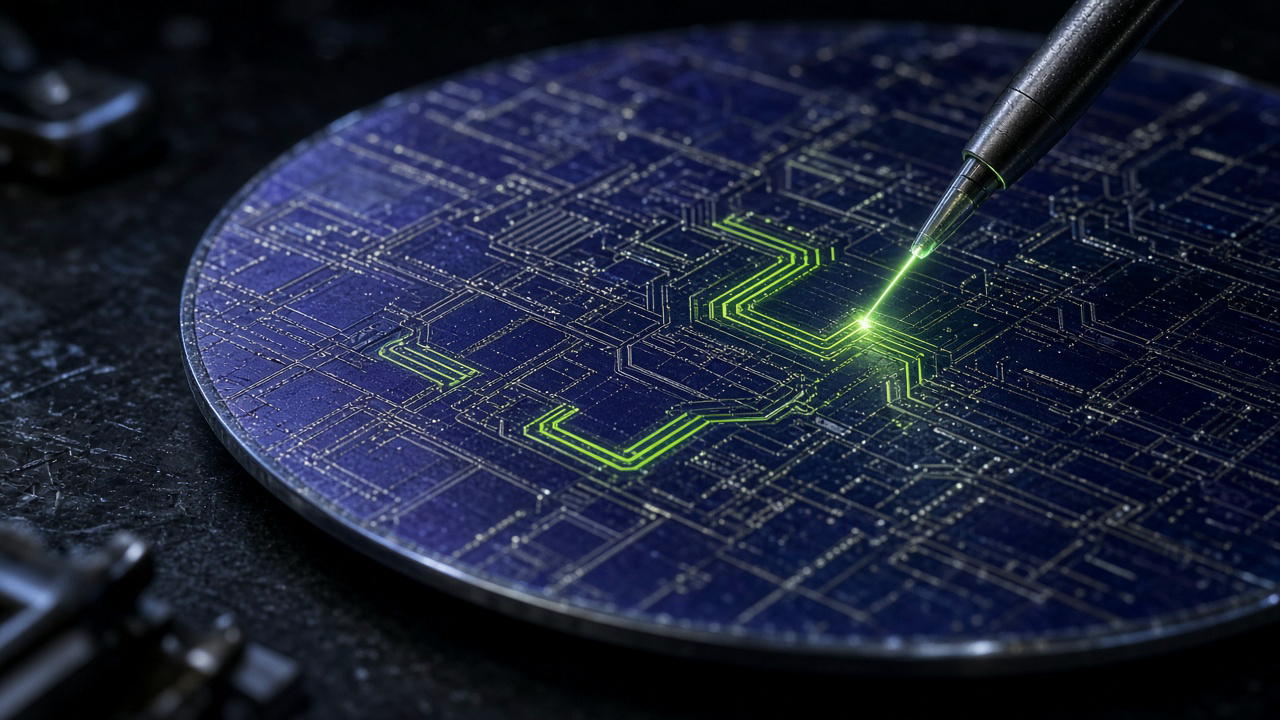
OpenAI says its models are now improving the chips that AI runs on, including chips designed by AMD. In a post on November 18, 2026, the company said its models found up to 14% improvement in power, performance and area (PPA) against heavily optimized baselines on AMD’s flagship GPU IP. OpenAI describes this as “roughly a year of progress achieved in less than 5 months.” AMD has already used some of the changes in a recent design sent for manufacturing.
The post also explains the model-driven gains behind Jalapeño, OpenAI’s first custom inference chip, and publishes an evaluation of how successive OpenAI models perform at processor design.
Rewriting RTL that experts had already tuned
The AMD work centers on SystemVerilog RTL, the code that describes a chip’s circuits. OpenAI says its model found further gains by rewriting that code and reasoned about RTL “at the level of an expert microarchitect.” It rewrote circuits that perform calculations, control operations and move data. The model used Synopsys tools to confirm that each rewrite kept the block’s behavior unchanged and to measure the trade-offs in power, performance and area.
According to OpenAI, AMD put some of the changes into a design sent for manufacturing and added others to its production design files for future versions. AMD also verified single-digit percentage PPA gains across key blocks of its upcoming next-generation flagship CPU using designs written by OpenAI’s model. OpenAI says it expects further gains on both the GPU and CPU relative to the most optimized baselines. The post does not say which AMD products are involved.
Smaller arithmetic blocks inside Jalapeño
OpenAI first described using its models on Jalapeño in August. The new post adds detail. The team started in early 2025 with GPT-o3 mini, and even that early model found nontrivial PPA improvements.
In the vector unit, which handles parallel computing tasks, savings came from floating-point adders and multipliers, conversion functions, reduction logic and the special-function unit. The models explored alternative logic and different ways of splitting work across pipeline stages, finding chances to share hardware and cut intermediate storage.
In the matrix unit, one multiplier redesign used about 15% less cell area in synthesis and cut latency from two clock cycles to one. A separate adder redesign also saved about 15% of cell area while keeping its two-cycle latency. Across the effort, OpenAI estimates that model-proposed changes reduced standard-cell area by about 13% in the vector unit and 10% in the matrix unit. It says these optimizations were proven in silicon during Jalapeño’s bring-up.
A RISC-V test to compare model generations
To track progress between model generations, OpenAI tested its models on two open-source 32-bit RISC-V cores. PicoRV32 is a compact core designed for FPGAs. Ibex is the embedded processor in the OpenTitan security chip.
In the first task, each model received a core’s hardware description and was asked to increase throughput. Designs were checked in simulation and scored zero if they failed a check or used more than 16 times the original core’s area. For passing designs, OpenAI measured instructions per clock on workloads hidden from the models and multiplied the result by the maximum clock frequency estimated with the open-source Yosys tool. The best result observed for each core set the 1.0 mark.
With a comparable budget of about 112,000 tokens per run, GPT-6.2 Astra had the highest average score on both cores. On PicoRV32 its score at that budget was about twice GPT-6 Astra’s. GPT-6.1 Sol also beat GPT-5.6 Sol on both cores.
In the second task, models designed a core from written requirements and interface templates, choosing their own data paths and pipeline stages. All five models scored higher this way than when improving the existing designs. At about 112,000 tokens, GPT-6.2 Astra averaged about 0.75 on Ibex and passed 0.7 on PicoRV32. The full evaluation covered 9,881 scored runs.
OpenAI lists the test’s limits. Designing from scratch let models drop features such as performance counters and extra instructions, which may explain part of the advantage. The company says requiring those features, setting a tighter area limit and checking timing after physical synthesis would make the test closer to production chip design.
Training a model to drive EDA tools
To ground future work in trusted evaluators, OpenAI says it is partnering with Synopsys to train GPT-Synopsys, a new model that uses Synopsys electronic design automation tools the way expert chip designers do. The two companies announced GPT-Synopsys on September 30. The new post does not give a release date.
All of the figures in the post come from OpenAI. AMD’s gains are described as verified by AMD, but they appear in OpenAI’s post rather than a separate AMD disclosure.
- #OpenAI
- #AMD
- #Chip Design
- #RTL
- #RISC-V

Author
Raj M
Contributor
AI Systems Architect is a seasoned technology leader with over 15 years of experience in the IT industry working with Fortune 500 companies. With a solid foundation in multi-agent systems, open-source LLM infrastructure, and enterprise deployment, he excels at building scalable production-grade AI platforms.