
Deepgram Acquires Daily, Keeps Pipecat BSD-Open Under a New Foundation, and Introduces a Real-Time Context Standard
Deepgram is acquiring Daily, the company behind the Pipecat voice-agent framework. Pipecat stays BSD V2 under an independent foundation, Daily's team joins Deepgram, and the companies are co-releasing an open Real-Time Context Standard for conversational voice stacks.
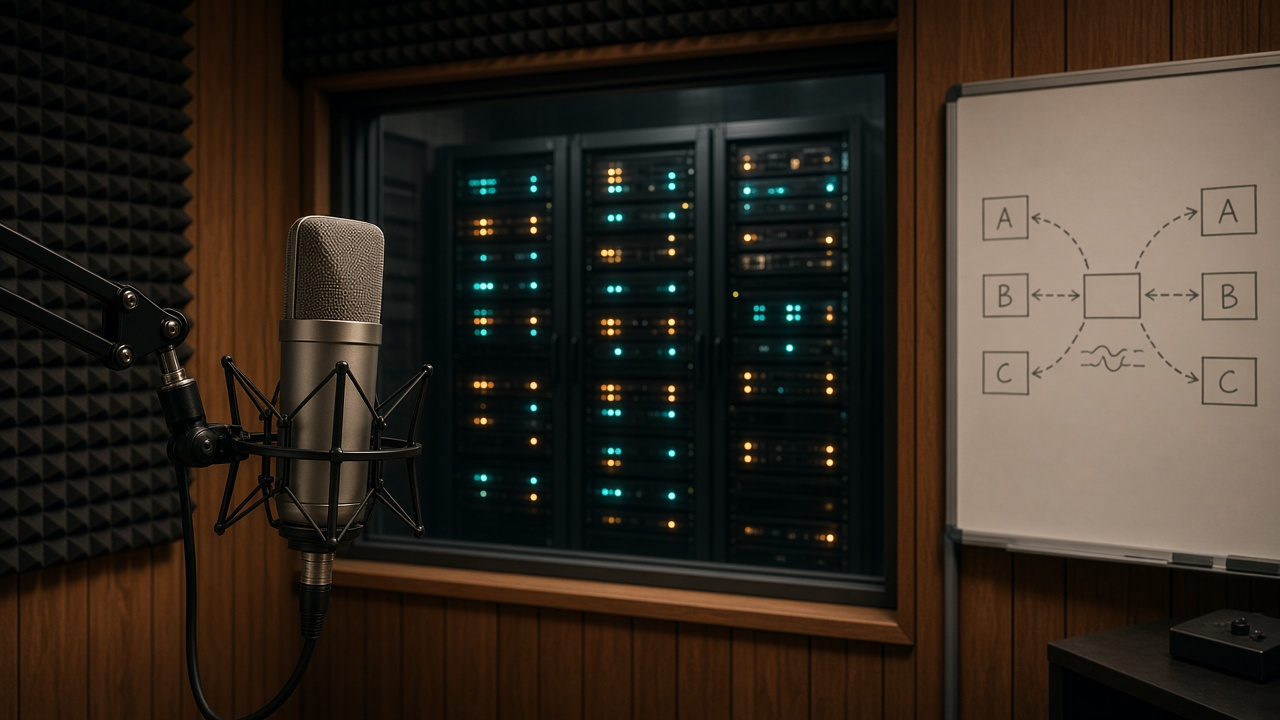
Deepgram is acquiring Daily, the company that built Pipecat, and is folding Daily’s real-time network and engineering team into a broader voice-agent platform while promising that Pipecat itself will remain free, open, and vendor-neutral. The deal was announced on October 29, 2026, from San Francisco. Financial terms were not disclosed. Both companies published matching posts: Deepgram’s corporate announcement and a personal note from Daily co-founder Kwindla Hultman Kramer, who becomes Deepgram’s Head of Open Source.
Pipecat stays under its existing BSD V2 license. Deepgram and Daily say they are establishing an independent Pipecat Foundation whose steering committee is meant to represent the wider real-time AI ecosystem, including companies that compete with Deepgram. Daily’s commercial products—WebRTC, telephony, cross-platform libraries, and the global real-time network—will continue under Deepgram sales and support.
What Deepgram says it is buying
Deepgram describes itself as voice AI infrastructure for production conversation, citing speech models used by more than 5,000 organizations and more than 650,000 developers. Daily contributes the other half of a live voice stack: a global network Deepgram’s post pegs at 75 points of presence, plus Pipecat, which both companies call the most widely used open-source voice-agent orchestration layer.
Kramer’s post adds operational texture. Daily and Deepgram went through Y Combinator together in 2016. Since 2019, Deepgram has powered transcription inside Daily’s audio-video APIs. Pipecat grew out of Daily’s 2023 experiments with human-to-AI communication and was open-sourced in 2024—core orchestration, client SDKs, the RTVI messaging standard, Smart Turn detection, SmallWebRTC transport, and Flows. Kramer cites more than 200 integrations and almost 400 contributors, and describes Pipecat as solving model switching, low-latency transport, turn detection, interruption handling, context management, async tool calling, and interfaces for observability, memory, and guardrails.
Scott Stephenson, Deepgram’s CEO and co-founder, said acquiring Daily lets the combined team “tackle the whole voice system” and shorten the path from prototype to production. Kramer said keeping Pipecat open was fundamental to joining.
The Real-Time Context Standard
Alongside the acquisition, Deepgram introduced the Real-Time Context Standard (RCS), an open protocol co-developed with the Pipecat team and unveiled at Deepgram Speak. The problem statement is specific: today’s voice pipelines often pass transcribed words from model to model while dropping richer audio context—tone, who is speaking, background conditions—so the language model and the speech synthesizer never share the same situational cues.
RCS defines three metadata types: context derived from the audio (for example, a whisper or an unclear word); instructions for how a language model should use those signals; and guidance for how the spoken response should be delivered. Adapters translate those signals for each provider so the same approach can span models from different vendors. Deepgram invites developers and model providers to test RCS, share feedback, and contribute to the specification. Demo and Pipecat integration pointers ship with the announcement; full technical follow-ups were promised after the Speak keynotes.
Voice Agent Platform preview, and what does not change for Pipecat users
Chief Product Officer Ed Anuff previewed a forthcoming Deepgram Voice Agent Platform that combines Deepgram’s models with Pipecat’s open infrastructure while preserving model choice. The same session was to introduce two new models built for live conversation, expanded language support, and a Global API aimed at connection reliability and latency. Those product details sit outside the acquisition post’s binding claims; the firm commitment in the deal materials is the stack shape—speech models, real-time transport, and open orchestration under one corporate roof with an open foundation for the framework.
For existing Daily customers and Pipecat adopters, Kramer’s post is blunt: “nothing will change” for current products and services, Pipecat remains open source and vendor neutral, and Deepgram is adopting Pipecat as the core of its new voice AI products. The Foundation structure is the governance answer to the usual open-source acquisition worry—that a framework becomes a proprietary funnel. Whether the steering committee’s independence holds in practice will be judged by later contribution and licensing behavior, not by launch-day language.
Price undisclosed acquisitions always leave a diligence gap for observers. What is public is the architectural bet: Deepgram wants to sell a production voice path without forcing builders off Pipecat or off multi-provider model choice, and it is putting RCS forward as the missing context layer between ears, brains, and mouths in a live agent.
- #Deepgram
- #Daily
- #Pipecat
- #Voice Agents
- #Open Source

Author
Raj M
Contributor
AI Systems Architect is a seasoned technology leader with over 15 years of experience in the IT industry working with Fortune 500 companies. With a solid foundation in multi-agent systems, open-source LLM infrastructure, and enterprise deployment, he excels at building scalable production-grade AI platforms.