
LangChain Managed Deep Agents 0.8 Separates User Memory, Credentials, and Webhooks
On September 24, 2026, LangChain shipped Managed Deep Agents 0.8 with user-level memory, user- and agent-owned connections, HTTP channels plus Slack file transfer, and built-in Parallel web search on LangSmith’s managed runtime.
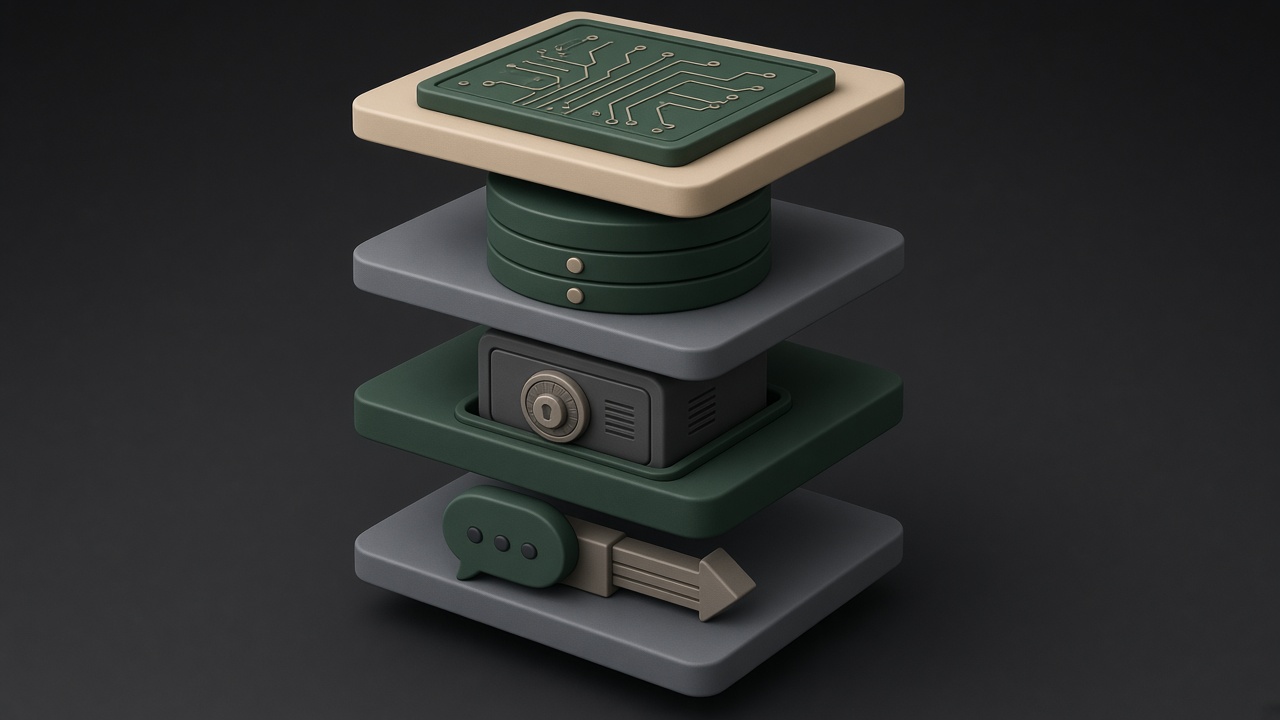
LangChain launched Managed Deep Agents 0.8 on September 24, 2026, extending its code-first Deep Agents harness with production primitives for identity-scoped memory, credential connections, multi-channel access, and a pre-built web search tool. The company blog frames MDA as the path from a working agent prototype to a deployment that does not force every team to rebuild auth, memory, channels, and tool permissions from scratch. A Managed Deep Agent remains a repository layout—agent.py (or TypeScript equivalents), instructions.md, identity, memory, tools, channels, middleware, schedules, connectors, skills, sandbox, and evals—compiled and deployed through the mda CLI onto LangSmith’s managed runtime. Docs note the product is in public beta and available on LangSmith Cloud in the US region.
Memory is the clearest structural change. Earlier releases already offered durable agent memory shared across a deployment. Version 0.8 adds a second layer for user-level memory keyed to the authenticated caller. In the blog’s API sketch, both layers are declared through define_memory with separate MemoryLayer objects. Agent memory mounts at /memories/agent/ and is shared; user memory mounts at /memories/user/ and stays bound to identity. LangChain states the runtime never copies content between those layers. Default access policies illustrate the intent: Slack one-to-one DMs allow both layers; Slack channels or group DMs allow agent memory but deny user memory; HTTP channels allow agent memory and deny user memory unless configured otherwise. Support and research examples in the post show team-wide escalation rules or procedures living in agent memory while personal brevity preferences or preferred source types live in user memory—so a group thread does not inherit one teammate’s private notes.
Connections handle the credential side of the same split. A connection is a named credential in a LangSmith workspace that tools read only at runtime. Agent-owned credentials are shared across users for capabilities that should not differ per person, such as a common web search key. User-owned credentials matter when the caller’s permissions differ inside GitHub, Linear, Notion, or Salesforce-style systems. LangChain says Managed Deep Agents ships out-of-the-box support for 23 services spanning Linear, GitHub, and Google Workspace tools, with LangSmith managing authorization flows, tokens, and methods so developers primarily configure identity and secrets rather than hand-rolling OAuth.
Channels expand how those agents show up where people already work. Slack support now includes file transfer, so a GTM or support agent can receive logs, spreadsheets, contracts, screenshots, or customer documents inside a DM, mention, or thread. New HTTP channels accept JSON webhooks from internal tools, customer portals, support systems, or order flows—useful when the same agent logic must live behind a product UI as well as Slack. The blog’s sample channels.http(...) helper shows provider, verify, parse, and messaging hooks living beside the agent project rather than in an ad-hoc gateway service.
Tooling gets a built-in Parallel-powered web search path. Teams add Parallel under the managed MCP servers map; LangSmith holds the vendor credentials and executes the tool so builders avoid a separate Parallel account and key for the beta period. Search results arrive as excerpts and source URLs, with calls visible in LangSmith traces. LangChain says Parallel web search is free through Managed Deep Agents while MDA remains in beta.
Operationally, the getting-started path is still uvx --from managed-deepagents mda init, local mda deploy, and the managed-deepagents package’s CLI surface for build, eval scaffolding, logs, and destroy. Customer quotes in the announcement emphasize Context Hub plus user-level memory for client confidentiality and Slack-first fleets with custom MCP servers. Relative to open harness SDKs that only swap coding loops, MDA 0.8 is LangChain’s bet that production agent UX is mostly memory scope, credential scope, and channel plumbing—now updated so those three are first-class rather than bolted on.
For Writeble’s ai-agents desk, this is the late-September LangSmith platform drop that separates what an agent remembers about a person from what it remembers about a team, without collapsing both into one shared prompt file.
- #AI Agents
- #LangChain
- #LangSmith
- #Developer Tools
- #Memory

Author
Raj M
Contributor
AI Systems Architect is a seasoned technology leader with over 15 years of experience in the IT industry working with Fortune 500 companies. With a solid foundation in multi-agent systems, open-source LLM infrastructure, and enterprise deployment, he excels at building scalable production-grade AI platforms.