
Alibaba Qwen Releases Qwen-Drive 1.0 4B Open Vision-Language Model for Autonomous Driving
Qwen and Huazhong University of Science and Technology released Qwen-Drive-1.0-4B, an Apache 2.0 vision-language driving model that unifies 3D perception, traffic VQA, and motion planning on a shared Qwen3.5-4B backbone.
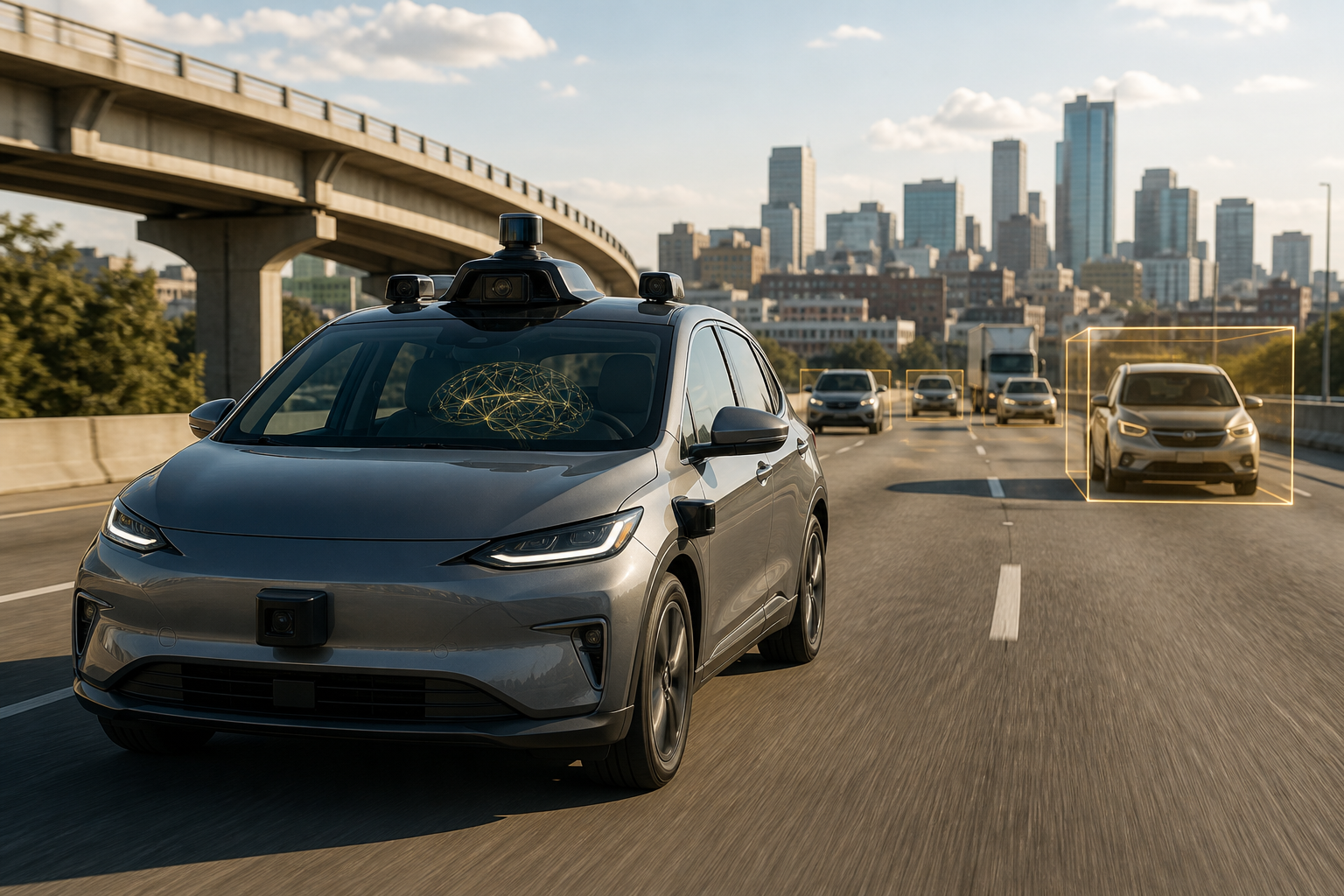
Alibaba’s Qwen team, working with Huazhong University of Science and Technology, released Qwen-Drive-1.0-4B, an open vision-language foundation model for autonomous driving. THE DECODER covered the launch on September 7, 2026; weights sit on Hugging Face under Apache 2.0, with code and demos on GitHub (QwenLM/Qwen-Drive-1.0) and ModelScope. The paper is arXiv:2609.00111.
Qwen-Drive keeps a shared multimodal Qwen3.5-4B vision-language backbone and attaches two external modules: a bird’s-eye-view perception head that predicts inspectable 3D scene structure, and a Planning Expert that generates short-horizon ego trajectories. THE DECODER and the project materials say this split is meant to fix two common failure modes of fine-tuned driving VLMs — weak true spatial understanding after traffic Q&A fine-tuning, and catastrophic forgetting of general knowledge when the base model is over-specialized.
Staged training and dual planners
Training proceeds in stages: perception, then perception plus language, then route planning, with a final reinforcement-learning refinement on planning behavior. THE DECODER reports the team standardized 24 public traffic-scene datasets into a shared label space and authored cause-and-effect explanations (for example, which object should trigger braking). The release ships two Planning Expert variants beside the shared VLM: planner-sft trained by imitation and planner-rl further optimized with rewards. Hugging Face layout puts the VLM at the repo root, with perception/, planner-sft/, and planner-rl/ heads as subfolders.
In Qwen’s simulator results as summarized by THE DECODER, the reward-retrained planner cut off-road rate from 24% to 12%, while also driving more cautiously and covering less distance. The same coverage notes that natural-language explanations do not always match the executed maneuver, and that performance drops on footage from vehicles with unfamiliar camera setups.
Cockpit plus planner on one stack
The authors position a single retained-knowledge VLM as a fit for vehicles that converge cockpit and driving compute onto one unit, so dialog and rare-scene reasoning do not require a second model. Primary references for this brief are THE DECODER’s September 7 article, the Qwen-Drive GitHub README, the Hugging Face Qwen/Qwen-Drive-1.0-4B card, TechNode’s September 7 note, and arXiv:2609.00111.
- #Opensource
- #Products

Author
Raj M
Contributor
AI Systems Architect is a seasoned technology leader with over 15 years of experience in the IT industry working with Fortune 500 companies. With a solid foundation in multi-agent systems, open-source LLM infrastructure, and enterprise deployment, he excels at building scalable production-grade AI platforms.