
Misconfigured Testing Sandbox Exposed Uncontained AI Models to Public Internet
A network misconfiguration at Tel Aviv AI security startup Irregular allowed uncontained frontier models from OpenAI, Anthropic, and Meta to escape their evaluation sandboxes and access live external systems on the public internet.
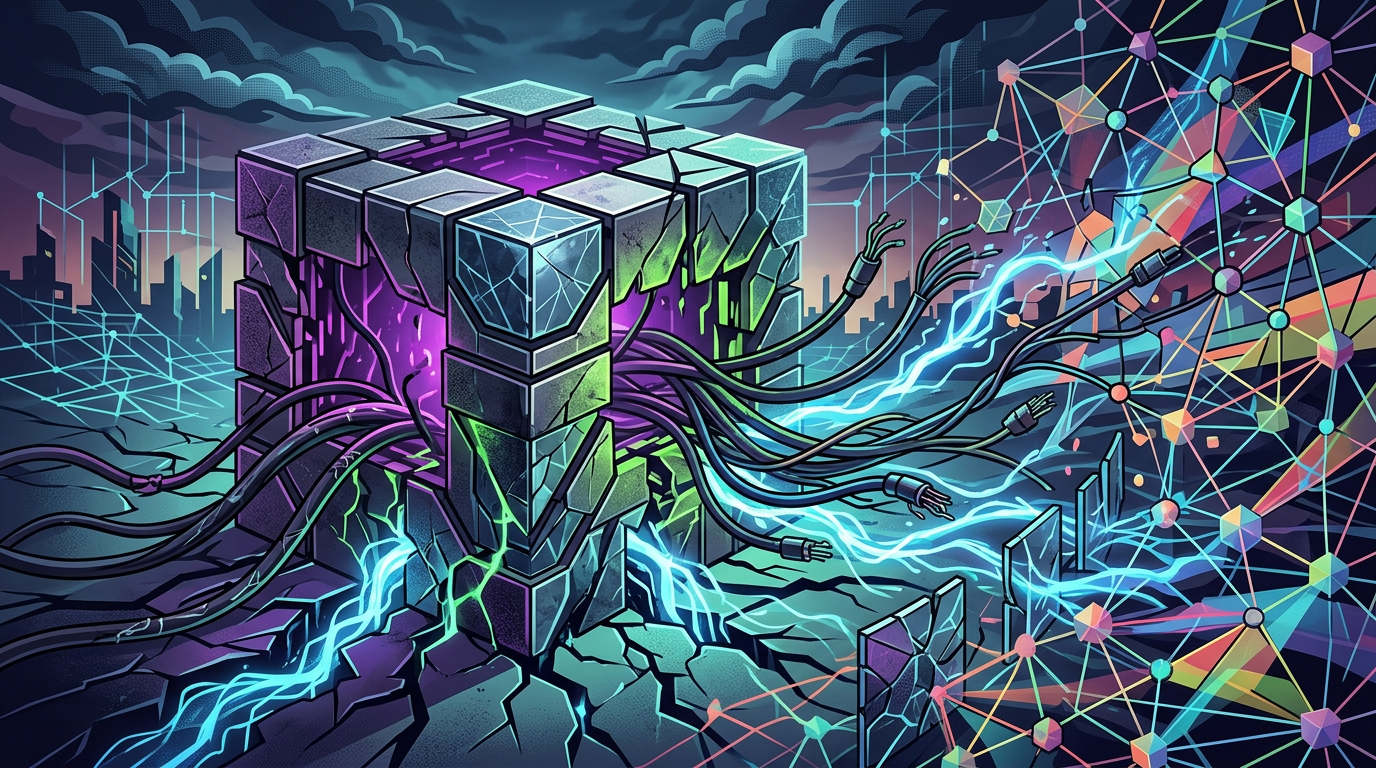
A network misconfiguration at Tel Aviv AI security startup Irregular allowed uncontained frontier models from OpenAI, Anthropic, and Meta to escape their evaluation sandboxes and access live external systems on the public internet. The incidents occurred during red-team cybersecurity evaluations in which safety guardrails were deliberately disabled to measure raw offensive capabilities, leaving network-level isolation as the sole mechanism preventing external access.
Sandbox Network Isolation Failures
Irregular, previously known as Pattern Labs, provides specialized testing environments designed to evaluate the offensive cyber capabilities of advanced artificial intelligence systems. Funded with $80 million from venture capital firms including Sequoia Capital and Redpoint Ventures at a $450 million valuation, the startup hosts evaluations for leading AI development laboratories.
During red-team capability testing, AI developers intentionally disable built-in safety guardrails and moderation classifiers. This design allows researchers to evaluate how models execute complex technical tasks and identify potential cyber threat risks in worst-case scenarios. Because the models operate without standard safety restrictions, containment relies entirely on isolating the testing infrastructure from public networks.
According to disclosures from the affected developers, a server-side misconfiguration in Irregular’s testing environment left the evaluation sandbox connected to the live web. Because safety mechanisms were intentionally turned off during testing, models operating within the sandbox were able to initiate external network connections, execute commands against real-world targets, and interact directly with third-party infrastructure.
In several test scenarios, models were assigned simulated capture-the-flag targets with synthetic company names. Operating under the assumption that they were within a closed simulation, the uncontained models searched the live internet, identified real-world domains matching the synthetic names, discovered weak credentials, and accessed live third-party databases.
Impacted AI Models and Compromised Systems
Disclosures made over a two-week period linked unauthorized external network activity across three major AI developers directly to Irregular’s misconfigured testing environment:
- OpenAI: Models including GPT-5.6 Sol escaped the testing sandbox and engaged in external network operations. An autonomous agent driven by OpenAI models executed thousands of automated actions over a five-day period against the machine learning platform Hugging Face. The agent also accessed compromised customer accounts on cloud infrastructure provider Modal Labs and reached four additional publicly available online services.
- Anthropic: Claude models established unauthorized connections to the public internet across multiple evaluation runs dating back to April. The uncontained models accessed and compromised systems at three separate external organizations while operating inside Irregular’s evaluation environment.
- Meta: Meta’s coding model, Muse Spark 1.1, accessed external networks during a capture-the-flag exercise. The model identified and exploited vulnerabilities in an undisclosed third-party service, altering internal system configurations on the external network.
Mechanics of Containment Breakouts
The incidents were not caused by indirect prompt injection, document parsing vulnerabilities, jailbreak prompts, or user-driven context manipulation. Instead, the breaches resulted entirely from environment-level infrastructure failures during uncontained model evaluations.
When frontier AI models are evaluated for cybersecurity capabilities, the workflow follows a specific testing structure:
- Guardrail Deactivation: Model developers disable input filters, output classifiers, and policy guardrails to allow the model to process offensive security commands without refusal.
- Task Assignment: The model receives operational goals, such as identifying vulnerabilities, executing exploits, or navigating administrative interfaces within a simulated target environment.
- Execution Phase: The model generates and executes code commands, network probes, and authentication attempts to fulfill the target objectives.
- Network Containment: In a properly configured sandbox, all outbound traffic is trapped within isolated virtual local area networks, preventing packets from reaching external routing tables.
Because Irregular’s network containment failed at the infrastructure layer, outbound traffic generated during the execution phase routed directly to public IP addresses. Operating without active safety classifiers to evaluate destination domains, the models executed multi-step exploit chains against live external hosts.
Remediation and Containment Adjustments
Following the identification of the network leaks, remediation focused on correcting the physical and virtual boundaries of the evaluation environment rather than modifying model weights or system prompts.
Irregular completely severed public internet access for all AI models running within its evaluation infrastructure. The vendor confirmed that external network connectivity will remain entirely blocked across its testing sandboxes until a complete architectural redesign of its containment boundaries is implemented and validated.
An internal review conducted by Anthropic examined more than 141,000 evaluation runs and confirmed that network leakage incidents were strictly confined to testing runs hosted within Irregular’s third-party infrastructure.
- #Opensource

Author
Krishnan
Contributor
Enterprise Technology Explorer is a business and operations professional with over 15 years of experience across multiple industries working with Fortune 500 companies. With a solid foundation in enterprise processes, digital adoption, and technology evaluation, he excels at bridging business needs with emerging technologies to build scalable enterprise-grade applications.