
MIND Launches Autonomous AI DLP Agents With Model Context Protocol Interface
Data loss prevention platform MIND announced the launch of MIND AI DLP Agents, featuring specialized capabilities for autonomous classification, policy production, and incident investigation. The launch includes a Model Context Protocol (MCP) interface that enables security teams to direct data security tasks using natural language through any MCP-connected client. The company also announced it has achieved ISO/IEC 42001 certification for responsible AI and joined Anthropic's Cyber Verification Program.
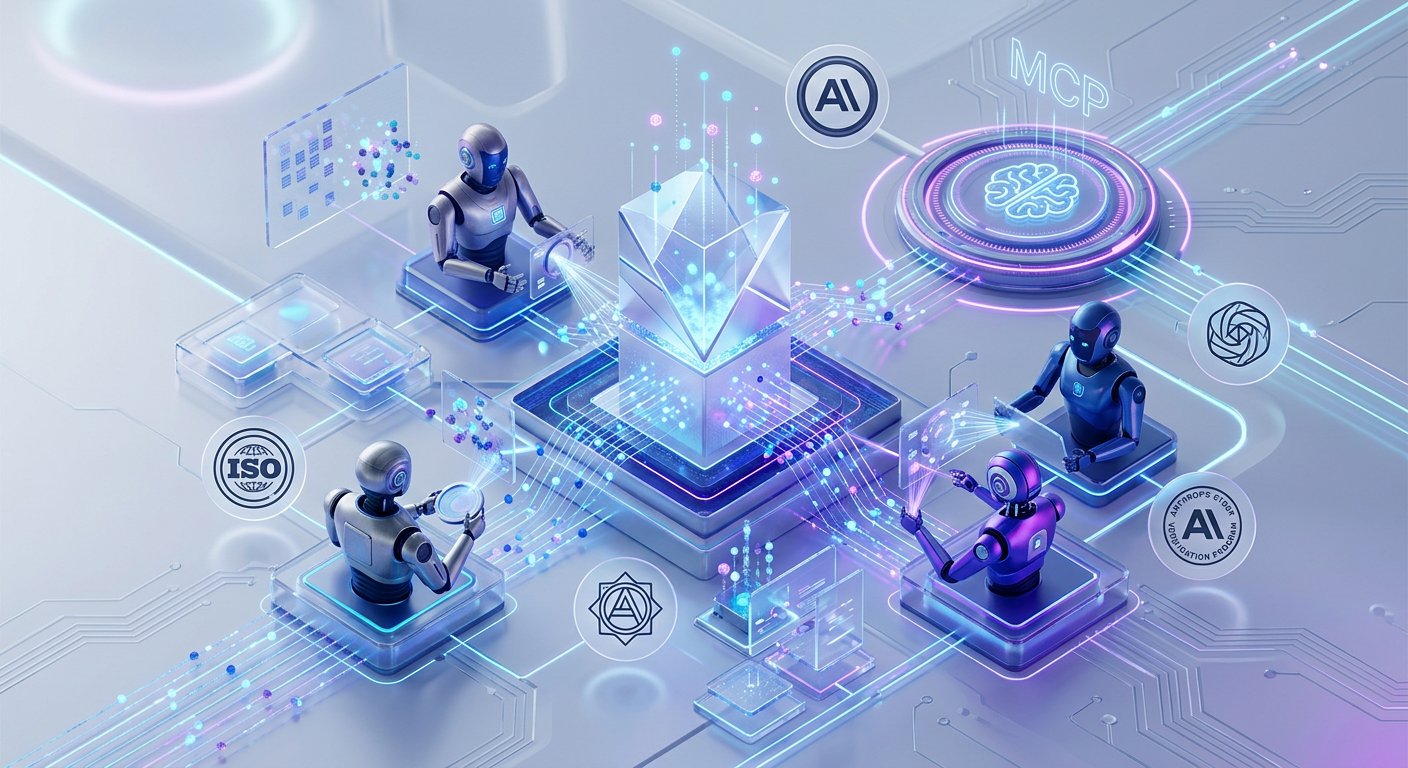
Seattle-based data security company MIND has announced the launch of MIND AI DLP Agents, an autonomous platform designed to handle the core operational tasks of enterprise data loss prevention. The suite of five specialized agents automates data classification, policy generation, incident investigation, and remediation. The release also integrates a Model Context Protocol (MCP) interface, allowing security operations teams to orchestrate these tasks using natural-language prompts from within any MCP-compatible AI client.
Automating the Manual Overhead of Data Loss Prevention
Data loss prevention, or DLP, refers to the security strategies and technologies organizations use to ensure that sensitive data does not leave the corporate network. Historically, this process has required significant human intervention to construct rules, review alerts, and manage exceptions. Security analysts must write regular expressions or keyword lists to identify sensitive files, sifting through daily alerts and adjusting access controls manually.
According to MIND, this operational burden often exhausts security engineering resources. When security systems detect potential leaks, they flag them as alerts, but human teams must perform the actual investigation, policy adjustment, and exception management. The new agentic platform is designed to take over these repetitive operational steps, moving the human role from direct system management to supervisory oversight.
How the Five Specialized AI Agents Coordinate Security Tasks
The platform splits the traditional DLP lifecycle into five specialized AI agents that function together inside the corporate environment. Each agent is designed to manage a specific segment of the data security pipeline:
- Custom Classifier Agent: This agent automatically builds business-specific data classifiers at both the document and data-specific level. To minimize false alarms, it consults a judge for false-positives and self-improves over time.
- Policy Producer Agent: Rather than requiring security administrators to write rigid rule sets, this agent suggests, creates, and continuously refines security policies based on observed behavior in the environment and plain-language instructions.
- Issue Investigator Agent: When an incident occurs, this agent conducts the initial analysis. It investigates incidents, uncovers risk patterns across the environment, explains the risk in plain language, and suggests specific remediation actions.
- Rapid Response Agent: Acting on the findings of the investigator agent, this component executes approved remediation and containment actions immediately. It escalates cases to human personnel only when explicit manual approval is required.
- Reason Reviewer Agent: When employees attempt to bypass or override restrictions, this agent evaluates their written justifications against the organization’s policy guidance in real time to prevent the automatic “rubber-stamping” of exceptions.
Connecting AI Clients to Security Actions via the Model Context Protocol
The platform’s inclusion of a Model Context Protocol (MCP) interface shifts how security teams interact with DLP software. Developed by Anthropic and released as an open standard, MCP acts as a universal communication bridge between large language models and external databases, developer tools, or software applications. The protocol operates over JSON-RPC 2.0, standardizing how AI clients discover and invoke external functions without requiring custom API integrations.
By implementing an MCP interface, the MIND platform allows security analysts to control the DLP agents directly from any third-party AI interface that supports the protocol. Instead of logging into a dedicated security console, analysts can input natural-language commands to request forensic data, generate new policies, or trigger remediation steps. The AI client translates these text prompts into structured commands that the underlying security agents execute.
Prior Security and Governance Milestones Re-emphasized
In the July product launch, MIND also highlighted its broader security and governance foundation.
The company is the first data security provider to obtain ISO/IEC 42001:2023 certification, an achievement first announced on March 10, 2026. This globally recognized standard governs Artificial Intelligence Management Systems (AIMS), establishing requirements for the ethical development, deployment, and risk management of AI-based applications within enterprise environments.
Additionally, on May 20, 2026, MIND announced its acceptance into Anthropic’s Cyber Verification Program. This specialized security program reviews the defensive practices of AI developers to ensure safe utility. This verification enables MIND to use Claude’s full capabilities to sharpen how the platform discovers sensitive data, detects data security issues, and prevents data loss without default limitations on dual-use cybersecurity activities, while maintaining strict boundaries to ensure these expanded capabilities serve only legitimate security purposes.
Performance Metrics and Deployability
According to data published by MIND, enterprise organizations deploying the platform report an 80% reduction in overall DLP program management effort. The company also states that early adopters experience a 25% to 50% decrease in the time required to investigate individual security incidents, alongside a near-zero false-positive rate.
The platform is designed to deploy within minutes, according to corporate documentation, with initial risk mitigation actions visible within several hours of setup. Live demonstrations of the agentic workflows and MCP integrations are scheduled for the Black Hat USA 2026 cybersecurity conference, where attendees can view demonstrations at MIND’s booth #4527.
- #Products

Author
Krishnan
Contributor
Enterprise Technology Explorer is a business and operations professional with over 15 years of experience across multiple industries working with Fortune 500 companies. With a solid foundation in enterprise processes, digital adoption, and technology evaluation, he excels at bridging business needs with emerging technologies to build scalable enterprise-grade applications.